Fix
Why Is My Lino Print Patchy or Blotchy? Causes and Fixes
Published
As an Amazon Associate we earn from qualifying purchases. This does not change our picks. Affiliate disclosure
Short answer
A patchy lino print is most often too little ink on the block or uneven pressure on the paper. Rough or heavy paper and ink drying on the block come next. A blotchy print with filled-in lines is the opposite fault: too much ink. Roll the ink until it is thin, velvety and hisses lightly, and print by hand on smooth paper of about 40 to 160 gsm.
Gear for this job
All 6 picks comparedSpeedball Deluxe soft rubber brayer, 4 in
See price on AmazonSee it on AmazonSpeedball soft rubber brayer, 3 in
See price on AmazonSee it on AmazonQWORK soft rubber brayer, 6 in, steel frame
See price on AmazonSee it on Amazon
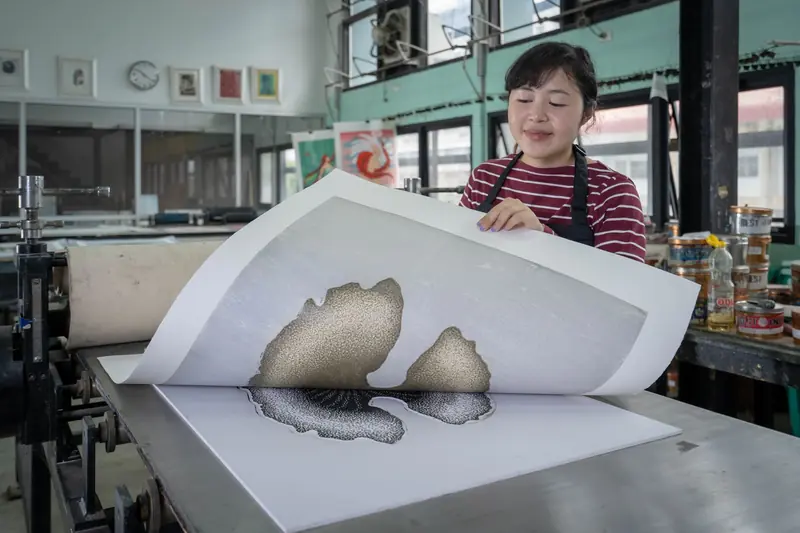
This page is for the moment after you peel back the paper and the print is pale, speckled or uneven. It applies to linocut and block printing on paper, from lino or soft blocks, printed by hand or on a small press. Four things decide how solid a print looks: how much ink is on the block, how evenly it was pressed, the paper, and how long the ink sat before printing. Change one thing at a time and pull a test print on the same paper, or you will not know which change worked.
Lino printing problems: what you see and the likely cause
Find your print in the first column. The rows run from the most likely cause to the least likely. Where two rows fit, fix the upper one first, pull another print and look again.
| What you see | Likely cause | What to do |
|---|---|---|
| Fine white speckle over the whole print, like salt | Too little ink on the block | Add a little ink to the slab, roll it out, ink in 2 or 3 more light passes |
| Solid in some areas, pale in others, often at edges and corners | Uneven pressure | Rub the whole back in small overlapping circles. Lift one corner to check |
| Even speckle that follows the texture of the paper | Paper too rough or too heavy for hand printing | Use smooth paper of 40 to 160 gsm, or print heavy paper on a press |
| Pale, broken print although the block was fully inked | Ink dried on the block before printing | Ink and print without a pause. Scrape off tacky ink, roll out fresh |
| Blobs, filled-in lines, a squashed ridge around shapes | Too much ink | Scrape ink off the slab, roll thinner, print once on scrap to clear the block |
| A white dot or pale spot in the same place on every print | A speck on the block, brayer or slab, or a hollow in the block | Pick off the speck and re-ink. Press a hollow with the tip of a spoon |
| Double or smeared edges | Paper or block moved | Hold the paper down with one hand, put the block on a non-slip mat |
Too little ink: the pale, salty print
A print with tiny white dots across the solid areas is short of ink. The film on the block is so thin that the paper only picks it up in places. Check the slab first. A correctly rolled slab looks thin, even and velvety, and the brayer makes a light hiss as it rolls. A slab that is nearly silent, with its surface showing through in streaks, has too little ink.
Add ink in small dabs, roll it out fully, then ink the block in several light passes from different directions, reloading from the slab between passes. The full routine is in how to use a brayer. If ink beads up on a new block instead of lying flat, the surface has oils on it: clean it or sand it lightly, as described in preparing a lino block.
Uneven pressure when printing by hand
If some areas are solid and others pale, the ink was there but the paper was not pressed into it everywhere. Hand printing puts pressure only where the baren or spoon passes, so edges, corners and the middle of large solid areas are easy to miss.
Rub the back of the paper with a baren or the bowl of a wooden spoon in small overlapping circles, working across the block in rows, then go around the edges. Before lifting the print, hold one half of the paper down flat and peel back the other half to look. A pale area can be laid back and rubbed again as long as the paper has not shifted. More in printing a linocut without a press.
Paper that is too rough or too heavy
Paper decides how much pressure a print needs. One supplier guide gives about 40 to 160 gsm for hand burnishing and 170 to 300 gsm for a press. Thin paper lets the pressure of a spoon reach the ink. Heavy paper spreads that pressure, so the print stays pale however hard you rub. Texture matters too: smooth or lightly textured paper prints cleaner than rough paper, where the ink reaches only the high points of the sheet. A heavy cotton sheet such as 250 gsm Stonehenge falls in the press range. The paper guide lists sheets that suit hand printing.
Blotchy prints and filled-in lines: too much ink
Blotchy is the opposite fault. Too much ink gets squeezed sideways under pressure. It fills fine lines, leaves a ridge around shapes and gives solid areas a mottled look. It also lets the paper skate on the block, which blurs edges. The slab gives it away: the ink looks wet, shows ridges or peaks, and the brayer makes a sticky squelch instead of a hiss.
Scrape some ink off the slab with a palette knife and roll what is left until it hisses. Take the excess off the block by printing once or twice on scrap paper without re-inking. If ink has packed into fine cuts, wipe the block clean and start again with a thinner film.
Ink drying on the block, specks and hollows
Water based block ink dries fast in a warm, dry room. If the block sits inked while you look for the paper, the film goes tacky and transfers in patches. Lay out the paper first, then ink and print at once. Scrape drying ink off the slab instead of rolling over it. A water-washable oil ink gives a much longer working time: compare the types in the ink chart.
A white dot that returns in the same place is a speck: dust, a crumb of lino or dried ink on the block, the brayer or the slab. Pick it off and re-ink. A pale area that returns in the same place although ink and pressure are right is a hollow, where the block sits lower than the area around it. Press that spot with the tip of a spoon. A curled block prints pale along the lifted side, so flatten it before printing.
Lino printing tips to prevent a patchy print
Most patchy prints are prevented before the paper goes down. These habits are standard practice, and each one removes a cause from the table above.
- Proof on scrap first. Pull one or two test prints on cheap paper and adjust the ink before using good paper.
- Listen to the slab. Roll until the film is velvety and hisses lightly. Silence means too little ink, a squelch means too much.
- Ink the same way every time: several light passes, a new direction on each pass, reloading the brayer from the slab.
- Keep it clean. Brush crumbs off the block after carving, and keep the slab and brayer free of dried ink.
- Match paper to pressure: thin, smooth paper by hand, heavy paper on a press.
Quick answers
Short answers to the common searches about patchy and blotchy lino prints. The paper weights come from one supplier guide.
- Why is my lino print not working? Usually ink or pressure. Check the slab for a thin, hissing film, then rub the whole back of the paper, edges included.
- Why are my lino prints blotchy? Too much ink. It fills lines and leaves ridges around shapes. Scrape ink off the slab and roll a thinner film.
- What are the most common lino printing problems? Too little ink, uneven pressure, rough or heavy paper, ink drying on the block, too much ink and paper that moves.
- What is the top tip for an even lino print? Roll the ink thin and even, then test on scrap paper before printing on good paper.
What you need for this
- See price on AmazonAmazon
Speedball Deluxe soft rubber brayer, 4 in
- See price on AmazonAmazon
Speedball block printing baren, 4 in
From Best Barens for Linocut and Block Printing Without a Press
- See price on AmazonAmazon
Speedball Printmaster paper, 9 x 12 in, 50 sheets
- See price on AmazonAmazon
Woodzilla Lino Printing Press, A4, Mint
From Best Hand Presses for Linocut and Block Printing at Home