How-to
How to Print a Linocut Without a Press
Published
As an Amazon Associate we earn from qualifying purchases. This does not change our picks. Affiliate disclosure
Short answer
You do not need a press for lino printing at home. Lay thin, smooth paper of about 40 to 160 gsm on the inked block and rub the back with a baren or the bowl of a wooden spoon in small overlapping circles. Before lifting, hold the sheet down and peek under one corner. Pale areas go back down for more rubbing.
Gear for this job
All 7 picks comparedSpeedball block printing baren, 4 in
See price on AmazonSee it on AmazonYasutomo bamboo bark baren, 3 7/8 in
See price on AmazonSee it on AmazonWenses glass baren, 4 in, borosilicate
See price on AmazonSee it on Amazon
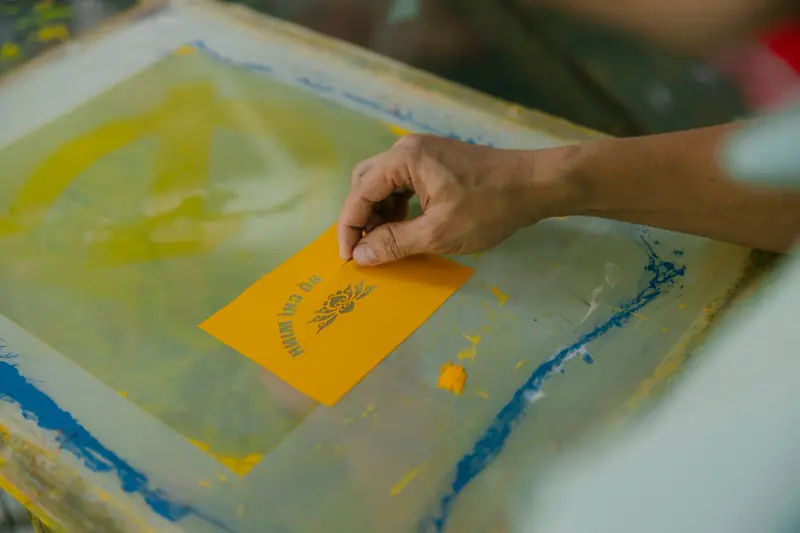
A press does one thing: it pushes paper onto the inked block with even force. By hand you supply that force one patch at a time, so the result depends on three things you control: how thin the paper is, how well the block is inked and whether every part of the block gets rubbed. This page compares the hand methods used for linocut and block printing, from the spoon to standing on the block for fabric, then gives the order of work for a print on paper.
Baren, spoon, roller or rolling pin: which hand method?
The same push from your arm gives more pressure through a small contact patch and less through a wide one. That is the whole difference between these tools. Read the table by what you print on: paper is burnished from the back, fabric is pressed or struck.
| Method | Pressure | Evenness | Print size | Paper or fabric |
|---|---|---|---|---|
| Wooden spoon | High: the force goes through a small patch | Good if every area is covered. Missed strips print pale | Small and medium blocks, slow on large ones | Thin, smooth paper, about 40 to 160 gsm |
| Baren | Medium: the flat disc spreads the force | Even on flat areas. Edges and corners need extra passes | Medium and large blocks, covered faster | Thin, smooth paper. Lighter sheets are easier |
| Clean brayer (roller) | Low to medium, along one line | Variable on paper: the sheet can creep | Blocks narrower than the roller | Fabric laid over the block, or thin paper with care |
| Rolling pin | Medium: body weight along a long line | Fair. Cranfield's example adds mallet hits after it | Wide blocks | Fabric on a padded surface |
| Standing on the block | Highest by hand: full body weight | Even only with a board over the block | Blocks that fit under the board | Fabric only, on a padded surface |
Is a block printing baren better than a spoon?
A baren is a disc with a flat bottom and a handle, made to rub the back of the paper and lift ink from the block. Today it comes in plastic, in nylon and with ball bearings set into the face. The usual substitutes are a large wooden spoon or a glass jar with a smooth base. Hobby sources disagree on which is best. One gallery guide calls the wooden spoon the most effective tool because it concentrates pressure. A supplier guide calls the baren the tool of choice because its flat face presses evenly.
Both are right. Use the spoon where you need solid, dense color or the paper is on the heavy side. Use a baren to cover a larger block before the ink dries. The two combine well: baren over the whole sheet first, spoon over the solid areas after. Options are compared in the baren guide.
What paper works for lino printing at home?
Paper weight matters more than the tool. One supplier guide gives about 40 to 160 gsm for hand burnishing and 170 to 300 gsm for a press. Thin Japanese papers and light cartridge paper sit in the hand range. A heavy cotton printmaking sheet such as Stonehenge, at 250 or 320 gsm, is press paper. Smooth or lightly textured paper prints cleaner than rough paper, because the ink only reaches the high points of a rough sheet. See paper for lino printing for sheets sorted by weight.
Note.If a print is patchy on heavy paper, change the paper before you add ink. Extra ink fills fine lines long before it makes up for missing pressure.
How to print a linocut by hand, step by step
These steps are for paper, with water based or water-washable oil ink. Have the paper cut and a clean place for wet prints ready before you roll out ink, because water based ink can dry on the block while you look for a sheet. Rolling out is covered in how to use a brayer.
- 1
Cut thin, smooth paper of about 40 to 160 gsm at least 1 in (2.5 cm) larger than the block on every side, so you have a margin to hold.
- 2
Roll the ink on the slab to a thin, even, velvety film. It should make a light hiss under the brayer, not a squelch. Roll it onto the block in several thin passes, changing direction.
- 3
Set the block ink side up on a non-slip mat. Hold the paper by two opposite edges, lower it onto the block in one move and do not shift it once it touches.
- 4
Press the sheet down lightly with a flat hand, from the center out to the edges, so the paper tacks to the ink and cannot slide.
- 5
Burnish the back with the baren or the bowl of the spoon in small overlapping circles. Use firm pressure, work in rows from one side to the other, then go around the edges and corners a second time.
- 6
Hold one half of the sheet flat with your hand and lift one corner to look. If the print is pale or speckled, lay the paper back down and rub that area again.
- 7
Peel the paper off slowly from one corner while holding the block down. Lay the print flat on its own to dry and ink the block again before every print.
How to tell the print is done before you lift it
The corner peek is the only reliable check, and it works because the rest of the sheet stays stuck to the ink. Keep a flat hand on the half you are not lifting. Look for three things: solid areas with no white speckle, edges that are as dark as the middle, and fine lines that are still open. Speckle in one area means more rubbing there. Speckle everywhere on the first pull usually means too little ink, and lines that have filled in mean too much. The full list of causes is in why a lino print is patchy.
DIY block printing on fabric: roller, mallet or body weight
Fabric is printed the other way up: the inked block goes face down on fabric laid over a padded surface. Cranfield's fabric guide advises against rubbing fabric with a spoon or baren, because the cloth moves and the image smudges. Its examples use a heavy rolling pin followed by sharp hits with a mallet, or fabric laid over the block and pressed with a clean roller. Some fabric printers put a board or a book over the block and stand on it. Curing is covered in how to block print on fabric.
When a linocut hand press is worth it
Hand burnishing has two limits: heavy paper and long runs. Paper of 170 to 300 gsm needs more force than a spoon delivers evenly, and rubbing 50 prints is slow work. A small lever press solves both. The Woodzilla A5, for example, takes a block up to 5.375 x 7.75 in. A home-built press has to do the same job, which is even pressure over the whole block, so try thin paper and a spoon before you build one. Sizes are listed in hand presses for linocut.
Quick answers
Short answers to the common questions about printing a linocut by hand. Paper weights are a supplier guide's range, not a hard limit.
- Can you do lino printing at home without a press? Yes. Use thin, smooth paper of about 40 to 160 gsm and rub the back with a baren or wooden spoon in small overlapping circles.
- Is a block printing baren better than a spoon? A baren covers the block faster and more evenly. A spoon gives more pressure on a small area, which helps solid color and heavier paper.
- Do I need a DIY block printing press? No. A press only adds even pressure. On thin paper a spoon or baren gives a solid print.
- What is a linocut hand press? A small lever press worked by hand. The Woodzilla A5 takes a block up to 5.375 x 7.75 in and suits paper of 170 to 300 gsm.
What you need for this
- See price on AmazonAmazon
Speedball block printing baren, 4 in
From Best Barens for Linocut and Block Printing Without a Press
- See price on AmazonAmazon
Speedball Printmaster paper, 9 x 12 in, 50 sheets
- See price on AmazonAmazon
Woodzilla Lino Printing Press, A4, Mint
From Best Hand Presses for Linocut and Block Printing at Home
- See price on AmazonAmazon
Speedball Deluxe soft rubber brayer, 4 in