Explainer
Can You Use Acrylic Paint for Block Printing? Yes, With a Medium
Published Updated
As an Amazon Associate we earn from qualifying purchases. This does not change our picks. Affiliate disclosure
Short answer
Yes, but not straight from the tube. Plain acrylic paint is too thin and slippery to roll into an even film, and it dries fast on the slab and the block. Mix it with a block printing medium, 3 parts medium to 2 parts paint for Daler-Rowney System3 medium, and it rolls out and prints like a block ink. Wash everything with water before the mix dries.
Gear for this job
All 7 picks comparedSpeedball water-soluble ink set, 6 x 1.25 fl oz
See price on AmazonSee it on AmazonSpeedball water-soluble block ink, black, 8 fl oz
See price on AmazonSee it on AmazonHandy Art water-soluble block ink, black, 16 oz
See price on AmazonSee it on Amazon
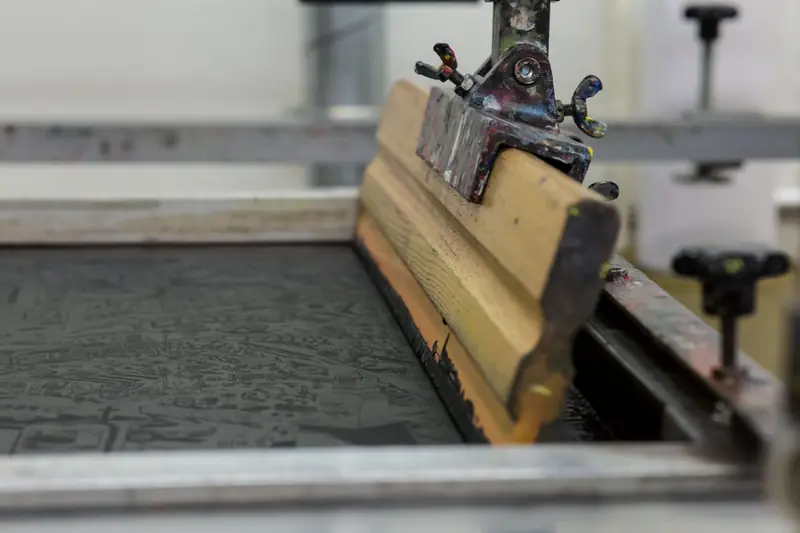
This page is for anyone who owns acrylic paint and wants to try linocut, also called lino printing or block printing, without buying ink first. Two things decide the result: body and working time. Block printing ink is stiff and tacky, so a brayer (a roller, in the UK) can spread it into a thin film that stays on the raised surface of the block. Acrylic paint is made to flow off a brush and dry quickly. A medium closes most of that gap, but not all of it.
Can you lino print with acrylic paint on its own?
You can get a mark, but rarely a clean print. Acrylic from a tube or bottle has less body than ink. Under the brayer it slides instead of gripping, so the film on the slab comes out streaky. On the block it tends to pool in fine cuts and at the edges of shapes. The print shows blobs in some places and bare patches in others.
The second problem is time. Acrylic dries fast, and a thin rolled film dries faster than a brushstroke. Paint that has started to dry on the slab or the block does not transfer to the paper, which gives a pale, patchy print. Once acrylic is dry it no longer dissolves in water, so a dried film has to be scraped off. It cannot be re-wetted.
What a block printing medium for acrylic paint does
A block printing medium is sold to turn acrylic paint into a usable block printing ink. Mixed in, it gives the paint the body to roll out thin and stay on the raised surface. The color comes from the paint, so any acrylic you own becomes a printing color.
The ratio is on the label. For Daler-Rowney System3 Block Printing Medium it is 3 parts medium to 2 parts paint, also listed as 1.5 to 1. Measure both with the same spoon: three of medium, two of paint. Other brands print their own ratio, so follow the label on the medium you bought.
| Batch | Medium | Acrylic paint |
|---|---|---|
| 2 1/2 teaspoons in total | 1 1/2 teaspoons | 1 teaspoon |
| 5 teaspoons in total | 3 teaspoons | 2 teaspoons |
| 5 tablespoons in total | 3 tablespoons | 2 tablespoons |
Note.A retarder alone is not the same thing. It slows drying but adds no body, so the paint still slides under the brayer. If you add one, use the amount on its label.
How to mix and roll out acrylic as block printing paint
Mix small batches. The mix keeps drying on the slab while you print, so a batch you can use up in a short session wastes less than a large one. Have the paper cut and the block ready before you open the paint.
- 1
Mix the color first. Blend your acrylics on the slab with a palette knife until the shade is right, because the medium goes in only after that.
- 2
Add the medium at 3 parts to 2 parts paint and work it in with the knife until the mix is one even color with no streaks.
- 3
Pull a short line of the mix across the top of the slab and roll it out with the brayer in different directions, lifting between passes, until the film is thin and velvety.
- 4
Listen. A thin film makes a light zzz or hiss. A wet squelch means too much on the slab: scrape some off and roll again.
- 5
Ink the block in several light passes from different directions, then print at once. Lay the paper on the block and rub the back with a baren or a wooden spoon.
- 6
Re-ink for every print. If the film on the slab turns tacky or drags, scrape it off and roll out fresh mix instead of rolling over it.
Acrylic with medium vs block printing ink: what to expect
Acrylic with medium is a real printing color, with trade-offs. A supplier tutorial for System3 medium notes that the mix is translucent unless a lot of white is added, and that it layers well for multi-block and reduction prints. The ink chart lists the mix as confirmed for printmaking paper only. For other surfaces no maker statement was found, so test on a scrap first.
| Point | Acrylic plus medium | Water based block ink | Water-washable oil ink |
|---|---|---|---|
| Working time | short: dries fast on slab and block | can dry on the block in a warm, dry room | long |
| Cleanup | water, before it dries | soap and water | liquid soap, then water |
| Dried film | no longer dissolves in water | stays water-soluble | allow days to dry |
| Color | any acrylic you own, translucent unless white is added | the maker's range | the maker's range |
| Surfaces confirmed | printmaking paper | paper and card | damp and dry paper |
Cleanup: wash the block and brayer before it dries
Clean up the moment the last print is pulled. While wet, the mix washes off the slab, brayer and block with water. Once dry, acrylic is a film that water will not move, and a brayer with dried paint on it presses that texture into every film it rolls afterward.
Wipe the block with a damp sponge or rag and blot it dry. Do not soak lino: it can warp or swell. Keep solvents off rubber rollers, because they break the rubber down. In a long session, stop and wash the brayer and slab whenever the film starts to dry at the edges. Rescue jobs are covered in cleaning dried ink off blocks and brayers.
When acrylic paint is the wrong choice
Acrylic with medium suits a first try, a short run of cards or a color you cannot buy as ink. For the jobs below a block ink is the better tool. The two ink families are compared in oil based vs water based block printing ink.
- Large editions: the mix dries while you work, so a long run means stopping to wash up and remix, and each new batch can differ slightly in color.
- Fine detail: fast-drying paint can build up in narrow cuts and fill them. A stiff ink rolled thin keeps fine lines open more easily.
- Fabric: no maker statement was found for this mix on fabric. For shirts and totes use a fabric block ink and see how to block print on fabric.
- Large blocks printed by hand: rubbing a big block with a spoon takes time, and the film can dry on the block before you finish.
When to buy block printing ink instead
Acrylic with a medium suits a first try or a color you cannot buy as ink. For regular printing, a block printing ink is stiff and tacky, so a brayer can spread it into a thin film that stays on the raised surface, and it does not dry on the slab as fast as a mix of acrylic. Water based block ink also cleans up with soap and water. Our guide compares water based inks and sets.
Quick answers
Short answers to the searches that lead here. The numbers match the site's ink chart, and the label on your medium overrides them.
- Can you lino print with acrylic paint? Yes, mixed with a block printing medium. Straight from the tube it slides under the brayer and dries too fast for a clean print.
- What is the best paint for lino printing? Block printing ink, which is made for the job. Water based ink is the easy start on paper. Acrylic with medium is the stand-in when you already own the paint.
- How much block printing medium for acrylic paint? For Daler-Rowney System3 medium, 3 parts medium to 2 parts paint. For other brands, use the ratio on the label.
- Does lino printing paint wash off the block? With water while it is wet. Dried acrylic does not dissolve in water, so wash the block, brayer and slab right after printing.