What Is Block Printing? The Process, the Blocks and the Inks
Published
Gear for this job
All 7 picks compared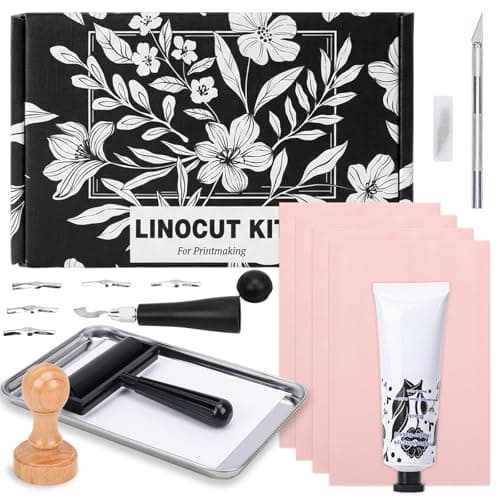
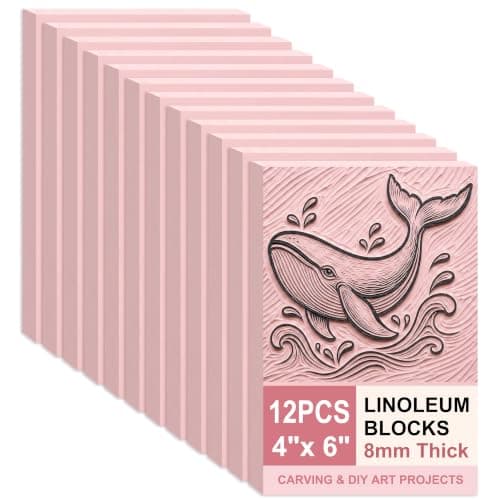
SGHUO linocut kit, 4 pink 4 x 6 in blocks, 3.5 oz ink
See price on AmazonSee it on Amazon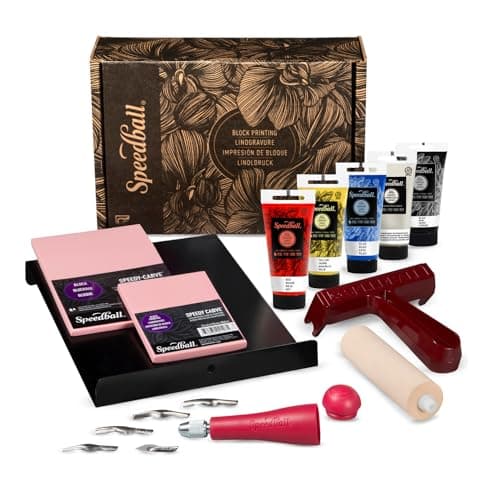
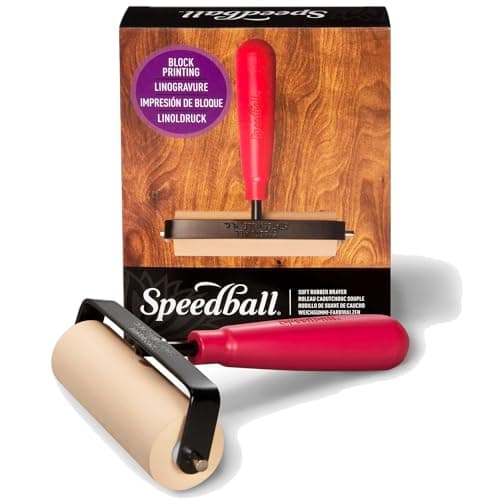
Speedball Deluxe block printing kit 3472
See price on AmazonSee it on Amazon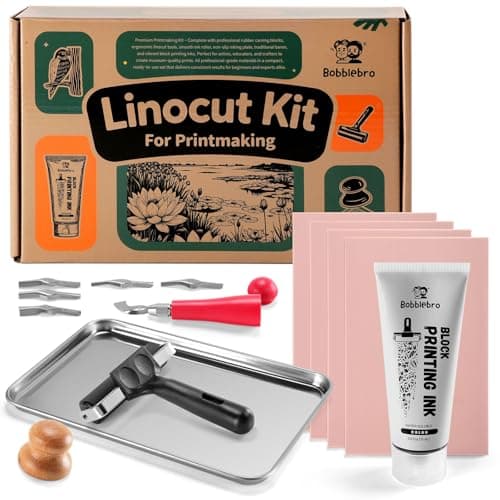
Bobblebro linocut kit, 4 blocks, 2.64 oz black ink
See price on AmazonSee it on Amazon
Block printing is a relief printing method: you carve away the parts of a block that should stay blank, roll ink onto the raised surface that is left, and press paper or fabric onto it to transfer the image. The block can be wood, linoleum, soft rubber or even foam, and the same block prints the same image again and again. This page explains how the process works, the main kinds of block printing, what you need to try it at home and how it differs from stamping and screen printing.
How block printing works
Every block print follows the same logic. The surface of the block is the image. Whatever you cut away sits lower than the surface, so the brayer (a rubber roller) never touches it and it stays the color of the paper. Whatever you leave standing picks up ink and prints. That is why block printing is called relief printing: the printing surface stands in relief above the cut areas.
Because the paper is laid face down on the block, the print is a mirror image of the block. A design with no lettering often survives the flip, but words and numbers must be carved reversed. Most printers draw the design on paper first, then transfer it to the block so that it lands reversed automatically, for example by rubbing a pencil tracing face down onto the surface.
The ink is rolled out thin on a smooth slab, then rolled onto the block in several light passes. Pressure does the transfer: a baren or the back of a wooden spoon rubbed over the paper, a hand press, or for fabric, your body weight leaning on the block. One carved block can print dozens or hundreds of copies, which is the point of the craft.
The main types of block printing
Woodcut is the oldest form. The image is cut into the side grain of a plank with knives and gouges, and the wood grain often shows in the print. Woodblock printing on paper and textiles goes back well over a thousand years in China, the Diamond Sutra of 868 CE is the oldest dated printed book, and Japanese ukiyo-e prints were made the same way with a separate carved block for each color. Wood engraving is a related, finer technique cut into end grain with engraving tools.
Linocut, also called lino printing, uses a sheet of linoleum instead of wood. Lino has no grain, so it cuts the same in every direction, and it is cheaper and easier to carve than most woods. It is the form most people mean today when they say block printing on paper. Soft rubber carving blocks, sold as Speedy-Carve, Speedy-Cut, soft-cut or simply pink blocks, are a softer modern alternative that carves with very little pressure and suits beginners, children and stamp makers.
Textile hand block printing is the other big tradition. In India, especially Rajasthan and Gujarat, carved wooden blocks have been used for centuries to print repeating patterns on cotton, with towns such as Sanganer and Bagru known for it. Printers stamp the block by hand along the cloth, matching each impression to the last. At home the same idea works with a lino or rubber block and fabric ink.
Foam printing, where you press lines into a soft foam sheet with a pencil instead of carving, is a block print for classrooms and young children. It needs no blades at all.
What you need to start block printing
The core kit is short: a block to carve, a cutting tool with a V gouge for lines and a U gouge for clearing, block printing ink, a brayer, a smooth slab to roll the ink on (a sheet of glass or acrylic works), paper or fabric, and something to apply pressure. A wooden spoon is a usable substitute for a baren on small prints.
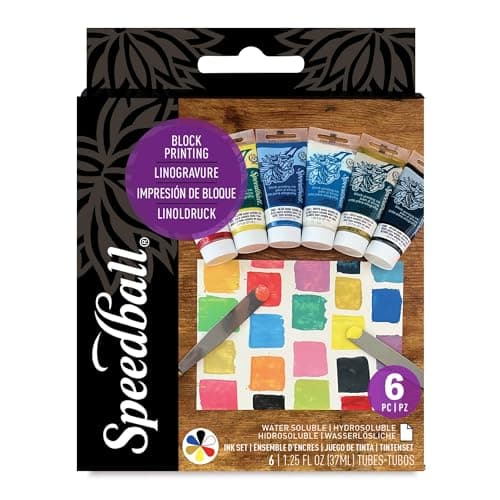
Ink is the choice that matters most. Water based block printing ink cleans up with soap and water and dries quickly on paper. Oil based ink stays workable longer on the slab and gives a richer, more even black, but it dries slowly and some versions need solvent to clean. For T-shirts, totes and tea towels you need an ink made for fabric, because ordinary water based block ink washes out.
A starter kit is the cheapest way to get the whole set in one box, but kits vary a lot: some have no baren, most have no paper, and many include only one block. Read what the box contains before you buy.
How a block print is made, in short
Draw the design at the size of the block, keeping shapes bold. Transfer it to the block so it sits reversed. Carve the outlines with a small V tool, then clear the areas that should stay white with a U gouge, cutting away from the hand that holds the block. Brush off the crumbs.
Roll a pea-sized amount of ink thin on the slab until it looks velvety, then roll it onto the block in several directions. Lay the paper on top in one move without sliding it, rub the back firmly over every part of the image, and peel it off from one corner. Water based ink on paper is usually dry to the touch in a couple of hours in a warm room. Oil based ink takes days.
Clean the block, brayer and slab straight away. The step-by-step page on how to lino print covers each of these stages in more detail.
Block printing vs stamping vs screen printing
A rubber stamp is a small block print. The difference is mostly in how it is inked and used: a stamp is mounted on a handle and pressed into an ink pad, while a block print is usually inked with a brayer and printed by rubbing the paper or by pressing the block onto cloth. Many people carve their own stamps from the same soft blocks used for block printing.
Screen printing is a different family. Ink is pushed through a fine mesh screen with a squeegee, and a stencil on the screen blocks it where it should not print. Screen printing handles large flat areas and fine photographic detail well, and it is the usual method for commercial T-shirts. Block printing needs no screen, emulsion or exposure step, which makes it simpler to start at a kitchen table, and it leaves a hand-printed texture that screen printing does not.
Relief prints also differ from intaglio prints such as etching, where the ink sits in the grooves rather than on the surface and a heavy press forces the paper into them.
Frequently asked questions
Is block printing the same as linocut? Linocut is one kind of block printing, the kind that uses linoleum as the block. Block printing is the wider term and also covers woodcut, soft rubber blocks and textile block printing with carved wooden blocks.
Is block printing hard for beginners? The basic process is easy to learn in an afternoon, especially on a soft rubber block that carves with little pressure. What takes practice is carving clean edges and getting an even layer of ink, which comes from rolling the ink thinner than most beginners expect.
Do you need a press for block printing? No. Most hobby printers print by hand with a baren or a wooden spoon. A small hand press helps with large blocks, solid areas and long runs, where rubbing by hand gets tiring and uneven.
Can you block print on fabric? Yes, with a fabric block printing ink, prewashed fabric, a padded surface and firm pressure. Cure the print as the ink maker says before washing it.