What Is Linocut? Lino Printing Explained, With Lino vs Woodcut
Published
Gear for this job
All 7 picks compared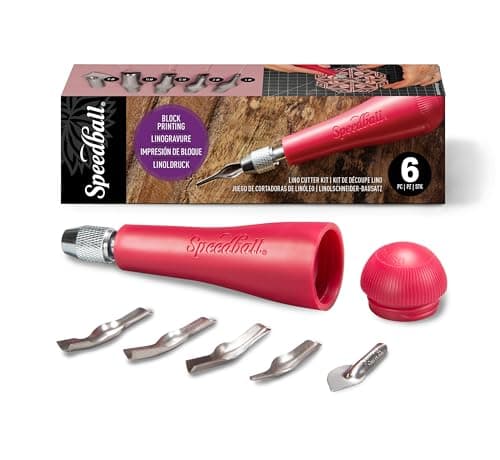
Speedball 4131 lino cutter set, 5 cutters and handle
See price on AmazonSee it on Amazon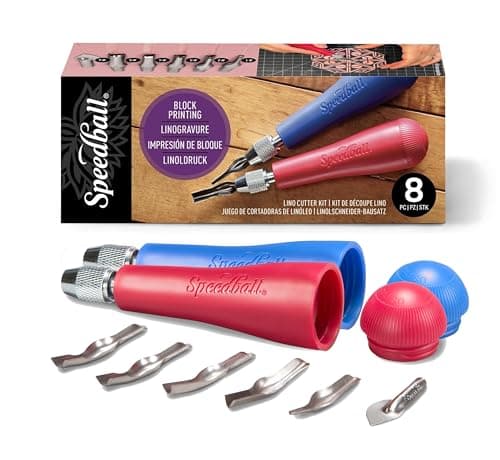
Speedball 2-handle kit with 6 lino cutters
See price on AmazonSee it on Amazon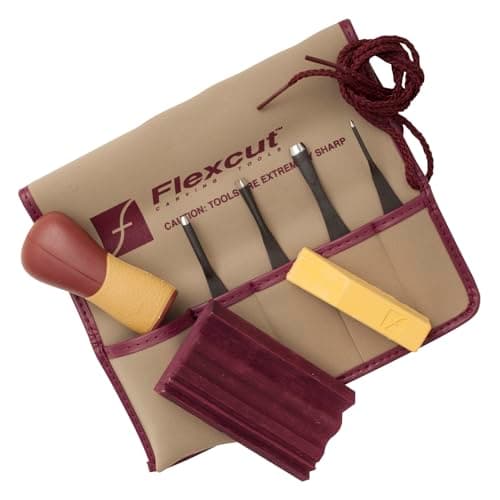
Flexcut SK130 lino set, 4 blades and handle
See price on AmazonSee it on Amazon
Linocut is a relief printmaking technique in which an image is carved into a sheet of linoleum, ink is rolled onto the uncut surface, and paper is pressed onto it to make a print. The word means both the process and the finished print, which is also called a lino print. Below: what artists' linoleum actually is, how a linocut is made, how lino compares with wood and soft rubber, and where the technique came from.
What linoleum is, and why it carves well
Printmaking lino is real linoleum, the same family of material that was used for floors long before vinyl. It is made from linseed oil that has been oxidized into a tough, rubbery binder, mixed with ground cork or wood flour, resins and pigment, and pressed onto a woven backing of burlap (hessian). The classic gray or tan sheet sold for printmaking is often called battleship lino and is usually about 1/8 in (3 mm) thick. It comes loose in sheets or glued to a wood or MDF base, sold as a mounted block.
Lino has no grain. A gouge moves through it the same way in every direction, which makes curves and lettering far easier than in most woods. It is firm enough to hold crisp edges and fairly fine lines, and soft enough to cut with hand tools without a mallet. It does have limits: it gets hard and brittle when cold or old, and very thin standing lines can crumble or break off.
Warming the sheet makes a big difference. Many printers carve with the lino on a warm surface or warm it briefly so the gouge glides instead of skidding.
How a linocut is made
The design is drawn or transferred onto the lino reversed, because the print comes out as a mirror image of the block. The artist then cuts away everything that should be white. A V-shaped gouge cuts outlines and fine lines, U-shaped gouges clear larger areas, and the cuts only need to go about halfway into the sheet, never through the backing.
Ink is rolled out thin on a glass or acrylic slab with a brayer, then rolled over the block until the raised surface has an even sheen. Paper is laid on top and rubbed with a baren or a spoon, or the block and paper go through a press. The carved areas stay below the inked surface and print as white.
For more than one color, there are two common routes. You can carve a separate block for each color and print them one over the other in register. Or you can make a reduction linocut, where one block is printed, carved further and printed again in the next color, so the block is gradually destroyed and the edition size is fixed by the first run.
Linocut vs woodcut
Both are relief prints and are inked and printed the same way. The difference is the block. Wood has a grain, so the cut behaves differently along and across it, and the grain itself can print as texture, which many woodcut artists use on purpose. Lino has no grain, so cuts look the same in every direction and broad areas print flat and even.
Lino is easier to carve and much cheaper, and it needs less sharpening effort, which is why it became the standard material for schools and hobby printing. Hard wood holds finer detail and stands up to longer print runs. Wood engraving, cut into the end grain of very hard wood with engraving tools, holds the finest lines of all, at the cost of slow work and small blocks.
In short: choose lino for bold shapes, curves, lettering and quick learning. Choose wood if you want grain texture in the print, or very long editions.
Linocut vs soft rubber blocks
Many blocks sold for lino printing are not linoleum at all. Pink, white or blue soft carving blocks are rubber or vinyl compounds that carve with very little pressure and do not crumble. They suit beginners, children and stamp makers, and they can be cut into shapes with a knife.
The trade-off is detail and crispness. Soft rubber gives under the tool, can tear on very thin lines, and its surface can feel slightly rubbery under ink. Traditional gray lino takes more effort, especially when it is cold, but holds a sharper edge and prints large solid areas well. A common path is to start on soft blocks and move to lino once the cutting technique feels natural.
Prints from either are still called linocuts or lino prints in everyday use. The site's comparison of soft cut and battleship lino covers the choice in more depth.
A short history of linocut
Linoleum was invented in England in the 1860s by Frederick Walton as a floor covering. Artists began to carve it for prints around the start of the twentieth century, notably among the German Expressionists of the Die Brücke group, and in the following decades it spread through art schools because it was cheap and easy to cut. In the 1920s and 1930s, Claude Flight and the Grosvenor School in London made color linocuts a recognized art form.
The best-known linocuts came later. Henri Matisse made white-line linocuts, with fine white lines cut into a black ground. Pablo Picasso took up linocut in the late 1950s and made many color prints by the reduction method, which did a lot to make that technique famous. Today linocut is one of the most popular printmaking forms for home printers, because it needs no press, no acid and no special studio.
What you need to try linocut
To make a first linocut you need a block, a cutter with at least a small V and a medium U gouge, block printing ink, a brayer, a smooth slab, paper and a baren or wooden spoon. A bench hook, a flat board with a lip at each end, holds the block steady and keeps your other hand behind the blade.
Water based block printing ink is the easiest start because it cleans up with soap and water. Thin, smooth paper prints by hand far more easily than thick watercolor paper. Japanese papers and light printmaking papers in the range of about 50 to 120 gsm are common choices for hand burnishing.
Frequently asked questions
Is linocut the same as lino printing? Yes. Linocut, lino print, lino printing and linoleum block printing all refer to the same relief technique. Linocut can also mean the finished print itself.
Can you use floor linoleum for linocut? Real linoleum flooring is the same basic material, but most modern sheet flooring is vinyl, which carves badly. Thick, patterned floor lino can also be too hard. Artists' lino is made to a known thickness with a smooth surface for printing.
Is a linocut an original print? Yes. Each sheet is printed by hand from a block the artist carved, so a linocut counts as an original print, not a reproduction. Prints from one block are usually signed and numbered as an edition.
How deep should you carve lino? Clear the white areas about half the thickness of the sheet, roughly 1 to 1.5 mm on standard 3 mm lino. Large open areas need clearing a little deeper so the brayer does not touch them.
What you need for this
- See price on AmazonAmazon
Speedball 4131 lino cutter set, 5 cutters and handle
From Best Lino Cutting Tool Sets: Handles With Interchangeable Blades
 See price on AmazonAmazon
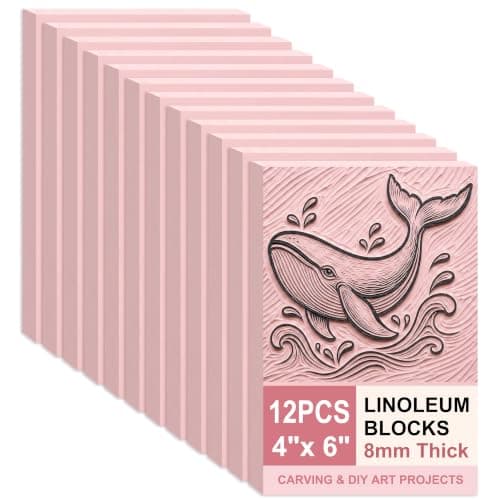
SGHUO pink rubber blocks, 4 x 6 in, 8 mm, 12 pieces
 See price on AmazonAmazon
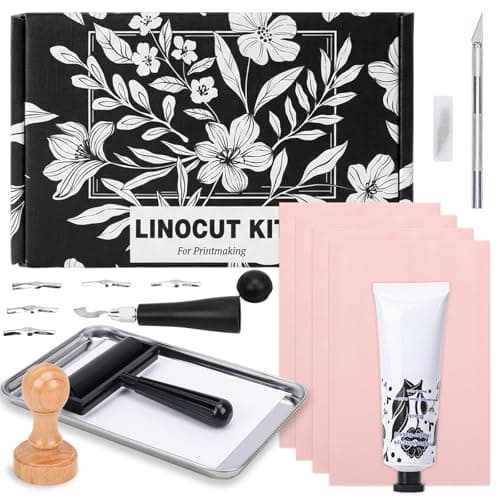
SGHUO linocut kit, 4 pink 4 x 6 in blocks, 3.5 oz ink
 See price on AmazonAmazon
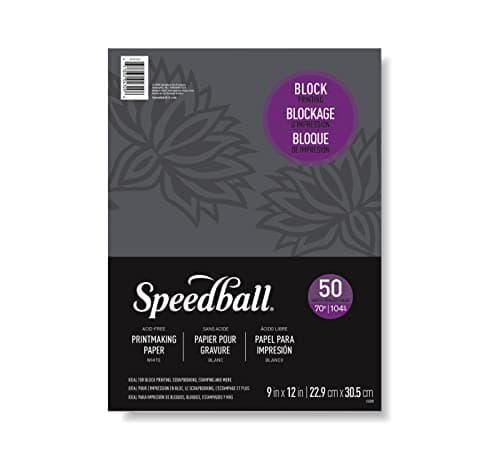
Speedball Printmaster paper, 9 x 12 in, 50 sheets